
How to Import Gold from Africa: A Complete Guide for International Buyers
Importing gold from Africa can give international buyers access to established producing markets and a wide range of gold products. However, a successful transaction requires more than finding a supplier and agreeing on a price.
Buyers must understand supplier verification, gold origin, assay requirements, export documentation, logistics, customs procedures, contracts, payment terms, and applicable compliance obligations.
This guide explains the main steps international buyers should understand when importing gold from Africa and how to approach the process professionally.
Why International Buyers Source Gold from Africa
Africa is an important gold-producing region with established mining and trading markets. International buyers may source gold from African markets in different forms, including gold doré bars, refined gold, nuggets, and other precious-metal products, depending on the country of origin and applicable regulations.
The opportunity can be attractive, but every transaction should be assessed individually. Product specifications, purity, availability, export procedures, taxes, logistics, and compliance requirements can differ substantially between countries and suppliers.
1. Identify the Type of Gold You Want to Import
The first step is to clearly define the product requirement. Buyers should specify the form of gold, expected purity, quantity, preferred delivery location, and commercial terms.
Common products can include:
- Gold doré bars
- Refined gold bars
- Gold nuggets
- Gold dust or other raw gold products where legally tradable
- Other precious-metal products subject to applicable regulations
For information about the gold products available through GBAC, visit our Gold Products page.

2. Find and Verify a Gold Supplier
Supplier verification should happen before a buyer commits funds or signs a major transaction. Buyers should establish the supplier’s legal identity, business registration, authority to conduct the proposed transaction, physical business information, and the identity of the authorized representative.
Where possible, information should be independently verified rather than accepted solely because it appears on documents supplied by the seller.
Buyers should also understand whether the supplier is a producer, licensed trader, exporter, intermediary, or another type of participant in the supply chain.
For a detailed checklist, read our guide on how to verify an African gold supplier.
3. Confirm the Origin of the Gold
Gold buyers should understand where the product originates and how it moves through the supply chain. The supplier should be able to explain the source of the gold and provide documentation appropriate to the transaction and jurisdiction.
Gold origin is particularly important for responsible sourcing and compliance. Buyers should be cautious when a supplier cannot clearly explain the origin, ownership, documentation, or movement of the gold.
4. Verify Purity and Arrange Assay
Gold purity has a direct effect on the commercial value of a shipment. Buyers should therefore establish how purity will be determined and what assay documentation will be provided.
Depending on the transaction, an assay may be performed before export, at a refinery, or by another appropriately qualified facility. For high-value transactions, buyers should consider whether an independent assay or verification process is appropriate.

5. Review the Commercial Offer
Before proceeding, the buyer should review the supplier’s commercial offer carefully. The offer should clearly identify the product, quantity, purity or quality specifications, price or pricing mechanism, delivery terms, documentation, and other important conditions.
Buyers should compare offers on an equivalent basis. A lower headline price does not necessarily represent a better transaction if important costs, refining charges, logistics, taxes, duties, or other obligations have not been included.
6. Use a Proper Sales and Purchase Agreement
A Sales and Purchase Agreement, or SPA, should clearly define the obligations of both parties. It should address the parties to the contract, product specifications, quantity, price, delivery terms, inspection or assay, documentation, payment conditions, responsibilities, dispute resolution, and applicable law.
For significant transactions, buyers should have the agreement reviewed by qualified legal and compliance professionals before signing.
7. Understand the Export Procedure
Gold exports are subject to the laws and procedures of the country from which the shipment originates. The exact requirements can vary depending on the jurisdiction, product, exporter, destination, and transaction structure.
Before a shipment moves, the parties should establish which documents are required and which party is responsible for obtaining them.
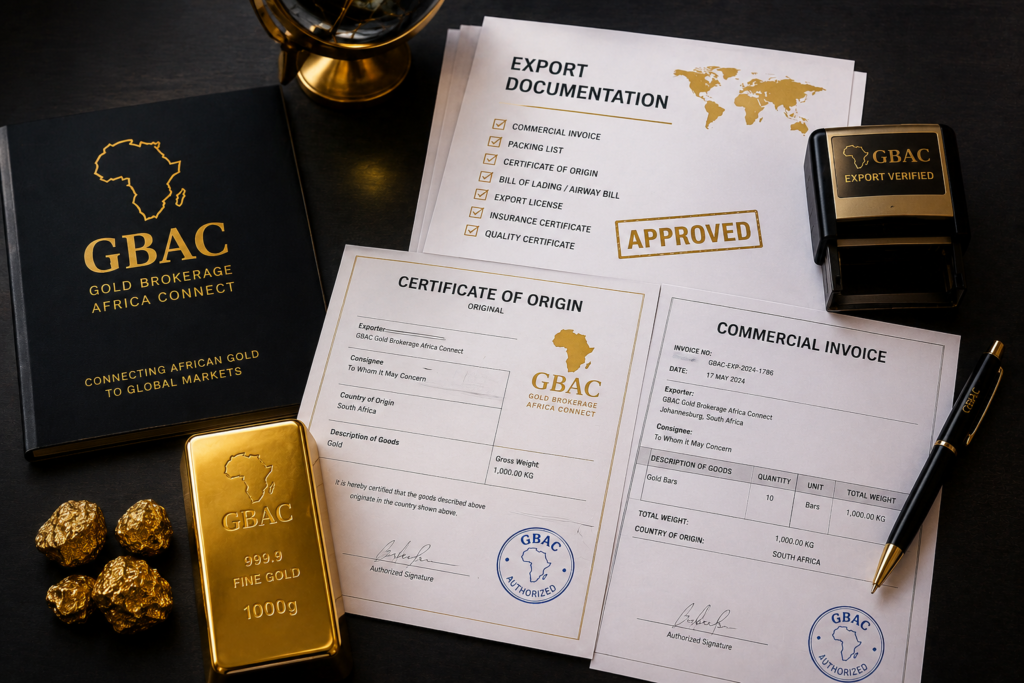
Depending on the transaction, documentation may include commercial invoices, packing lists, assay certificates or reports, certificates of origin, export permits, customs documentation, transport records, and other required documents.
8. Understand International Shipping and Insurance
International gold shipments require careful logistics. The buyer and seller should agree on the delivery location, shipping method, insurance responsibilities, customs responsibilities, and applicable Incoterms or other contractual delivery provisions.
Because gold is a high-value commodity, buyers should ensure that transportation and insurance arrangements are appropriate for the value and nature of the shipment.
9. Prepare for Import Customs Requirements
The importing country may have its own customs, tax, financial, licensing, reporting, and precious-metals requirements. Buyers should establish these requirements before the shipment is dispatched.
Import requirements vary by country, so buyers should obtain current advice from the relevant customs authority and qualified professionals in the destination market.
10. Understand Payment Conditions
Payment terms should be clearly documented before the transaction begins. Buyers should understand when payment becomes due, what conditions must be satisfied before payment, how assay results affect settlement, and which financial institutions may be involved where applicable.
Buyers should be particularly cautious about requests for unexplained advance payments, payments to unrelated third parties, or payment arrangements that are inconsistent with the written contract.
11. Conduct Compliance and Due Diligence Checks
International gold transactions should be approached with appropriate compliance procedures. Depending on the parties and jurisdictions involved, this may include customer identification, corporate verification, beneficial ownership checks where applicable, sanctions screening, source-of-funds considerations, responsible sourcing checks, and other regulatory requirements.
Read our Compliance information for more about professional and responsible gold transactions.

12. Avoid Common Gold Import Scams
International buyers should be alert to warning signs. A professional transaction should not depend on secrecy, unrealistic promises, or pressure to bypass normal procedures.
- Extremely low prices without a credible commercial explanation.
- Pressure to make urgent payments before due diligence.
- Unverifiable licenses or company registration details.
- Conflicting company names across documents.
- Unclear gold origin.
- Refusal to provide appropriate commercial documentation.
- Requests to bypass customs or export requirements.
- Promises of guaranteed profits.
- Requests to pay unrelated individuals or companies without a documented reason.
What Documents May Be Required?
The exact documentation depends on the country of origin, destination, product, transaction structure, and applicable laws.
- Company registration documents
- Relevant licenses or permits
- Commercial offer or Full Corporate Offer
- Sales and Purchase Agreement
- Commercial invoice
- Packing list
- Assay report or certificate
- Certificate of origin where applicable
- Export documentation
- Customs documentation
- Transportation and insurance records
Documents should be reviewed for consistency. Names, quantities, purity, dates, addresses, signatures, and transaction terms should correspond across the documentation.
How GBAC Can Support Gold Sourcing
Gold Brokerage Africa Connect (GBAC) connects qualified international buyers with gold sourcing opportunities across African markets. Our objective is to support professional communication between buyers and supply-side partners while encouraging appropriate documentation, due diligence, and responsible transaction procedures.
International buyers can explore our Gold Products, learn more About GBAC, review our Compliance approach, or Contact Our Team about a sourcing requirement.
Frequently Asked Questions About Importing Gold from Africa
Can international buyers import gold from Africa?
Yes, international buyers can participate in legitimate cross-border gold transactions, but the transaction must comply with the laws and requirements of the countries involved. Buyers should verify the supplier and understand both export and import requirements before proceeding.
What is the first step when buying gold from Africa?
The first step is to clearly define the required product, quantity, purity, destination, and commercial terms, followed by appropriate supplier and transaction due diligence.
Do I need an assay report?
Assay requirements depend on the transaction and parties involved. Buyers should establish how the gold’s purity will be verified and whether independent assay is appropriate for the transaction.
How do I avoid gold import scams?
Conduct supplier due diligence, independently verify important documents, understand the gold’s origin, use clear contracts, avoid unrealistic offers, and never allow pressure to bypass normal compliance or customs procedures.
What documents are needed to import gold?
Requirements vary by country. Common commercial and logistics documents may include invoices, packing lists, assay documentation, certificates of origin where applicable, export records, customs documentation, and transportation records.
Should I use a professional adviser?
For substantial international gold transactions, legal, customs, tax, compliance, and financial advisers can help buyers understand their obligations and structure transactions appropriately.
Conclusion
Importing gold from Africa can be a valuable international sourcing opportunity when the transaction is approached professionally. Buyers should focus on supplier verification, gold origin, purity, documentation, export procedures, shipping, customs, payment terms, and compliance before committing to a transaction.
The most important principle is simple: do not evaluate a gold offer based on price alone. A legitimate transaction should have a clear supplier, verifiable documentation, transparent procedures, appropriate contractual terms, and a compliance process suitable for the countries involved.
If you are an international buyer looking for African gold sourcing opportunities, contact Gold Brokerage Africa Connect to discuss your requirements.
