

Introduction
Gold nuggets are one of the most recognizable forms of natural gold and have fascinated traders, collectors, and investors for centuries. Unlike refined gold bars, gold nuggets are naturally occurring pieces of gold that are recovered during mining operations and are valued for both their precious metal content and their unique appearance.
For international buyers, understanding how gold nuggets are formed, evaluated, traded, and transported is essential when sourcing natural gold from reputable suppliers. This guide explains the characteristics of gold nuggets, their commercial applications, and the factors buyers should consider before making a purchase.
What Are Gold Nuggets?
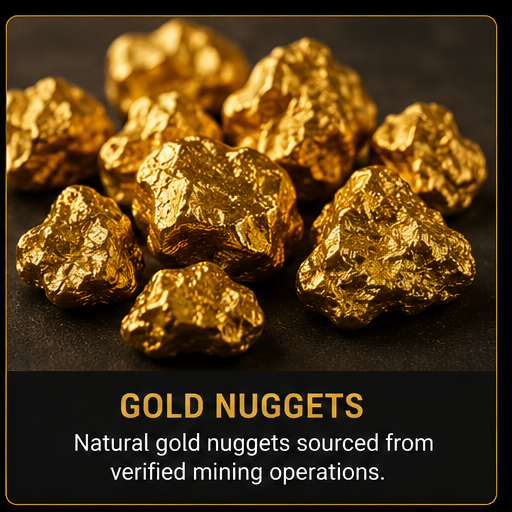
Gold nuggets are naturally occurring pieces of native gold that have been separated from surrounding rock through geological processes over millions of years. They are typically recovered through placer mining, river mining, or hard rock mining operations.
Unlike manufactured gold products, every gold nugget has a unique size, shape, weight, and surface texture. Some nuggets are smooth after years of movement through rivers, while others retain rough, irregular surfaces that reflect their natural origin.
Because of their uniqueness, gold nuggets are valued by both commercial buyers and collectors.
How Gold Nuggets Are Formed
Gold nuggets form naturally when gold-bearing rocks break down through weathering and erosion. Over long periods, water transports gold particles into rivers, streams, and other sedimentary environments where they gradually accumulate.
Larger pieces may remain intact and become gold nuggets, while smaller particles contribute to gold dust or fine placer deposits.
The geological history of each mining region influences the size, shape, and purity of the nuggets recovered.

Gold Nugget Purity
The purity of gold nuggets varies depending on their origin. Natural nuggets often contain small amounts of silver and other naturally occurring metals.
Professional buyers commonly verify purity through laboratory testing or assay reports before completing commercial transactions.
Purity is one of several factors that influence the value of a gold nugget, together with weight, rarity, and overall condition.
Commercial Uses of Gold Nuggets
Gold nuggets serve a variety of commercial purposes, including:
- Refining into high-purity gold
- Jewelry manufacturing
- Investment holdings
- Private collections
- Educational and geological displays
Commercial buyers generally evaluate nuggets based on their intended use and documented specifications.
Factors Buyers Should Consider
Before purchasing gold nuggets, buyers should carefully evaluate:
- Weight
- Estimated purity
- Origin
- Documentation
- Supplier reputation
- Applicable legal requirements
- Shipping arrangements
Conducting appropriate due diligence helps support transparent and professional transactions.
Documentation
International transactions involving gold nuggets may require commercial documentation appropriate to the exporting and importing countries.
Examples include:
- Commercial Invoice
- Packing List
- Assay Report (where applicable)
- Export Permit (where required)
- Air Waybill
- Insurance Documentation
- Sales and Purchase Agreement (SPA)
The exact documentation required depends on the applicable regulations and contractual arrangements.
Best Practices for International Buyers
When sourcing gold nuggets internationally, buyers should:
- Verify supplier credentials.
- Review commercial documentation.
- Understand product specifications.
- Clarify shipping responsibilities.
- Seek professional legal and financial advice where appropriate.
These practices help reduce risk and promote successful long-term business relationships.
Frequently Asked Questions
Are gold nuggets pure gold?
No. Most natural gold nuggets contain gold together with small amounts of other naturally occurring metals. The exact composition varies depending on where they were found.
How is purity determined?
Purity is commonly estimated through laboratory analysis or an assay report.
Can gold nuggets be refined?
Yes. Gold nuggets can be refined to produce higher-purity gold suitable for investment, manufacturing, or industrial applications.
Are gold nuggets traded internationally?
Yes. International trade is possible when transactions comply with the applicable laws, export regulations, and commercial agreements.
Conclusion
Gold nuggets represent one of nature’s most remarkable forms of precious metal and continue to play an important role in the international gold industry. Understanding their formation, purity, commercial uses, and documentation helps buyers make informed purchasing decisions.
Gold Brokerage Africa Connect (GBAC) supports international buyers by connecting them with trusted suppliers across Africa and facilitating professional gold sourcing through transparent business practices.